

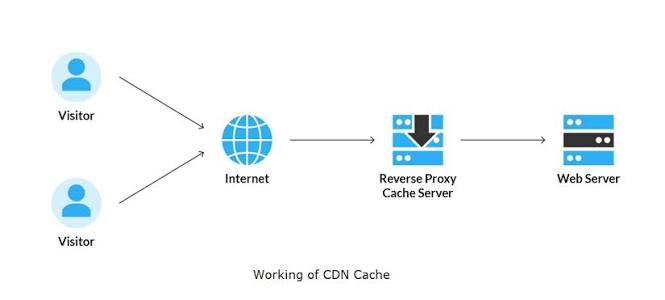
A detailed 2026 guide for web operations teams investigating region-dependent delivery, caching or routing issues on systems they control.
Official service: Proxyline
Proxyline is best understood here as a tool for CDN and cache troubleshooting, not as a guarantee of a particular business result. The useful question is whether its provider-published controls can help a team make one network variable more deliberate, observable and repeatable.
For this article, the focus is comparing how a controlled web property behaves from more than one network location when a bug appears only in a specific region. Proxyline publishes HTTP/SOCKS5 support, manual IP/subnet/city selection, 4,700+ networks and subnets, API access, immediate activation and rental periods starting at 5 days. Those features can be relevant when a workflow needs documented endpoints, but they should be validated against the exact website, application, region and policy involved.
Quick facts
| Best for | web operations teams investigating region-dependent delivery, caching or routing issues on systems they control |
| Service type | Proxy rental service |
| Provider-published features | Provider-published dedicated and shared proxy options, HTTP/SOCKS5 formats, manual IP/subnet/city selection, 4,700+ networks and subnets, API and personal account, rental from 5 days, immediate activation, auto-renewal, 48-hour refund/address-replacement policy, and 24/7 support. |
| Responsible-use note | Use the service only for lawful, authorized purposes and follow the rules of websites, networks, employers, payment providers and platforms involved. |
Why Proxyline fits this use case
The practical advantage in CDN and cache troubleshooting is control over the test path. A team can define an endpoint, record the region and timing, run a small set of checks, and then return to the same setup when a result needs to be confirmed. That is more useful than treating “another country� as an undefined condition.
The workflow also becomes easier to audit. When someone asks why a result looked different, the report can show the endpoint, browser or client settings, account state, date and expected outcome. Proxyline supplies one part of that environment; the application owner still needs to control the other variables.
A detailed practical workflow
- Write down the failing URL, expected cache behavior and the region where users reported the issue.
- Choose two or three stable endpoints rather than a large rotating pool.
- Compare response headers, visible content, asset versions and redirect behavior from each location.
- Purge or change cache configuration only after reproducing the difference and preserving evidence.
- Re-run the same checks after the fix to confirm that the regional difference is gone.
Start with the smallest test that can answer the question. Expanding to more endpoints, longer rental periods, more server locations or a higher VPS tier before the first result is understood usually increases cost and makes troubleshooting harder. A well-documented pilot gives better information for the next decision.
Example scenario
If a team receives reports that one country sees an old JavaScript bundle while another sees the current release, a fixed regional endpoint can help reproduce the symptom. The endpoint becomes part of a controlled diagnostic method rather than an attempt to simulate every possible user.
What to measure and document
- cache headers and asset version
- time to first meaningful response as an observation, not a benchmark claim
- redirect or localization differences
- whether the same build is served across regions
For meaningful comparisons, record the endpoint or server, local network, client or browser version, account state, test time and expected result. If several variables change at once, a difference may be real but still difficult to explain.
What to check before you rely on it
- A proxy result is one network observation, not a substitute for full synthetic monitoring.
- Do not attribute every difference to CDN caching; DNS, cookies and application logic can also contribute.
- Use the same browser and request method when comparing regions.
- Keep provider speed claims separate from your own measured application performance.
Provider-published feature lists are useful for screening, but they are not a substitute for testing. Performance and compatibility can vary by destination, region, local ISP, application, operating system and time of day. A short real-world pilot is usually the best way to decide whether the service fits the exact task.
Pricing & value
| Current published pricing shows shared IPv4 from $0.67 for 5 days or $0.99 for 30 days per IP. Individual IPv4 starts at $0.96 for 5 days or $1.77 for 30 days for small quantities; larger quantities receive lower per-IP rates. IPv6/32 options are cheaper. Always confirm the live country, quantity and rental period before purchase. Check current pricing |
A simple buying decision framework
| Requirement | Write the exact region, application, device count or server resources you need before comparing plans. |
| Pilot | Buy or test the smallest realistic option first and measure the real workflow. |
| Evidence | Keep screenshots, logs or configuration notes so success and failure are reproducible. |
| Scale | Increase quantity, term or server resources only when the pilot shows a clear reason. |
When it may not be the right fit
A proxy may be the wrong tool when the requirement is device-wide encryption, enterprise remote-access controls, a residential/mobile network simulation, or a managed testing platform with built-in observability. In those cases, a VPN, mobile test service, synthetic-monitoring platform or another specialized product may match the requirement better.
Bottom line
Proxyline can be a sensible option for web operations teams investigating region-dependent delivery, caching or routing issues on systems they control when the service is matched to a clear requirement and tested against the real workflow. The strongest decision is based on repeatability, compatibility, support, policy fit and total operational effort—not only the lowest advertised price.Editorial note: This article summarizes provider-published information and practical, lawful use cases. It is not an independent speed, security, uptime, anonymity, p
